

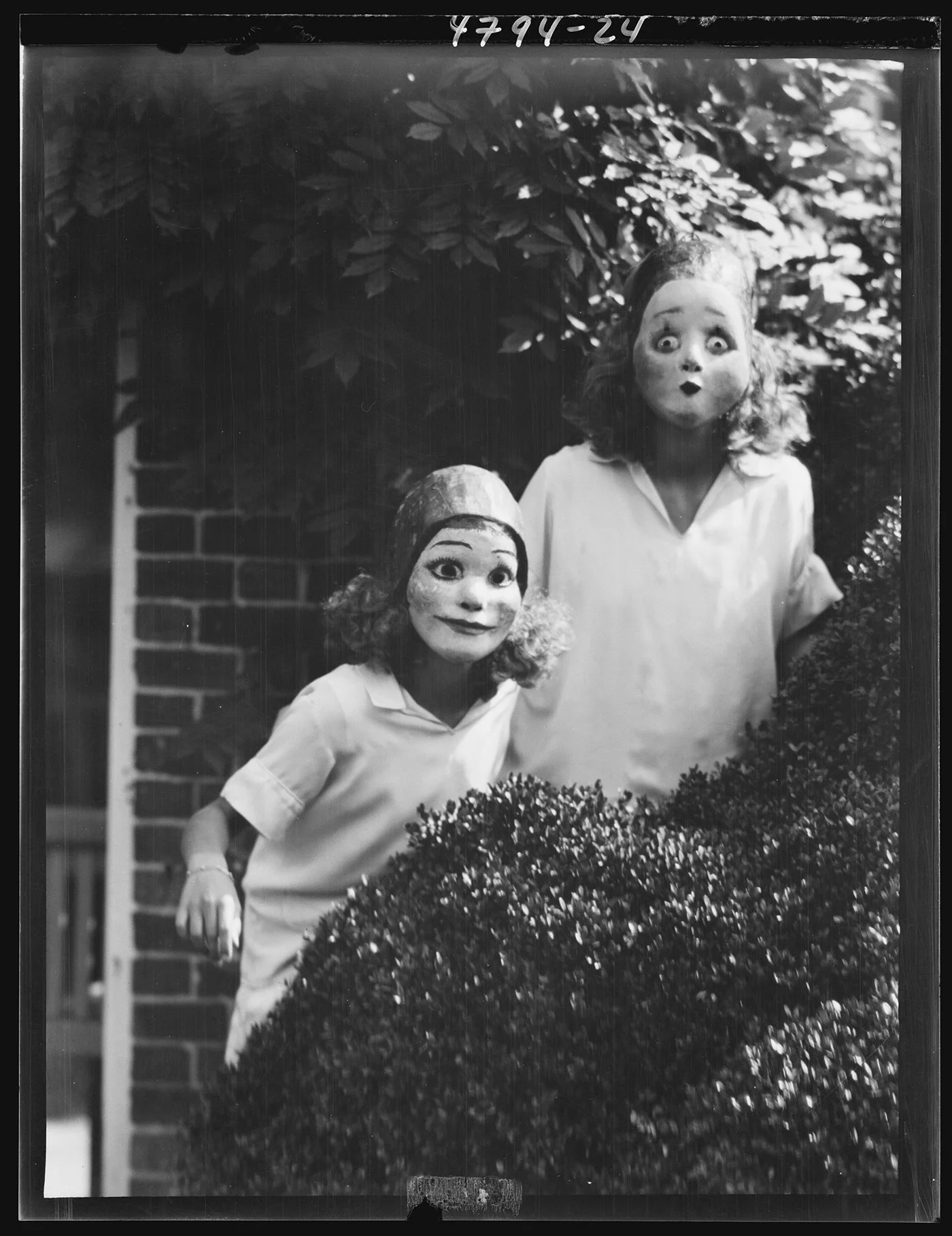
People wearing masks made by W.T. Benda, 1925
At first glance, these photographs feel oddly modern, as though they've wandered onto the set of a psychological horror film. The oversized eyes. The frozen expressions. The perfectly smooth faces that look almost, but not quite, human.
Yet these images weren't intended to be frightening in the slightest.
Taken in 1925 by celebrated photographer Arnold Genthe, they feature masks designed by Polish-American artist and illustrator Władysław Theodore Benda (1873–1948), whose handcrafted papier-mâché creations became one of the most fashionable artistic trends of the early twentieth century.
Today, Benda is remembered as one of America's most accomplished illustrators. He created covers for The Saturday Evening Post, illustrated books and magazines, designed theater costumes, and taught at the Art Students League of New York. But among collectors, he is perhaps best known for the masks that bore his name.
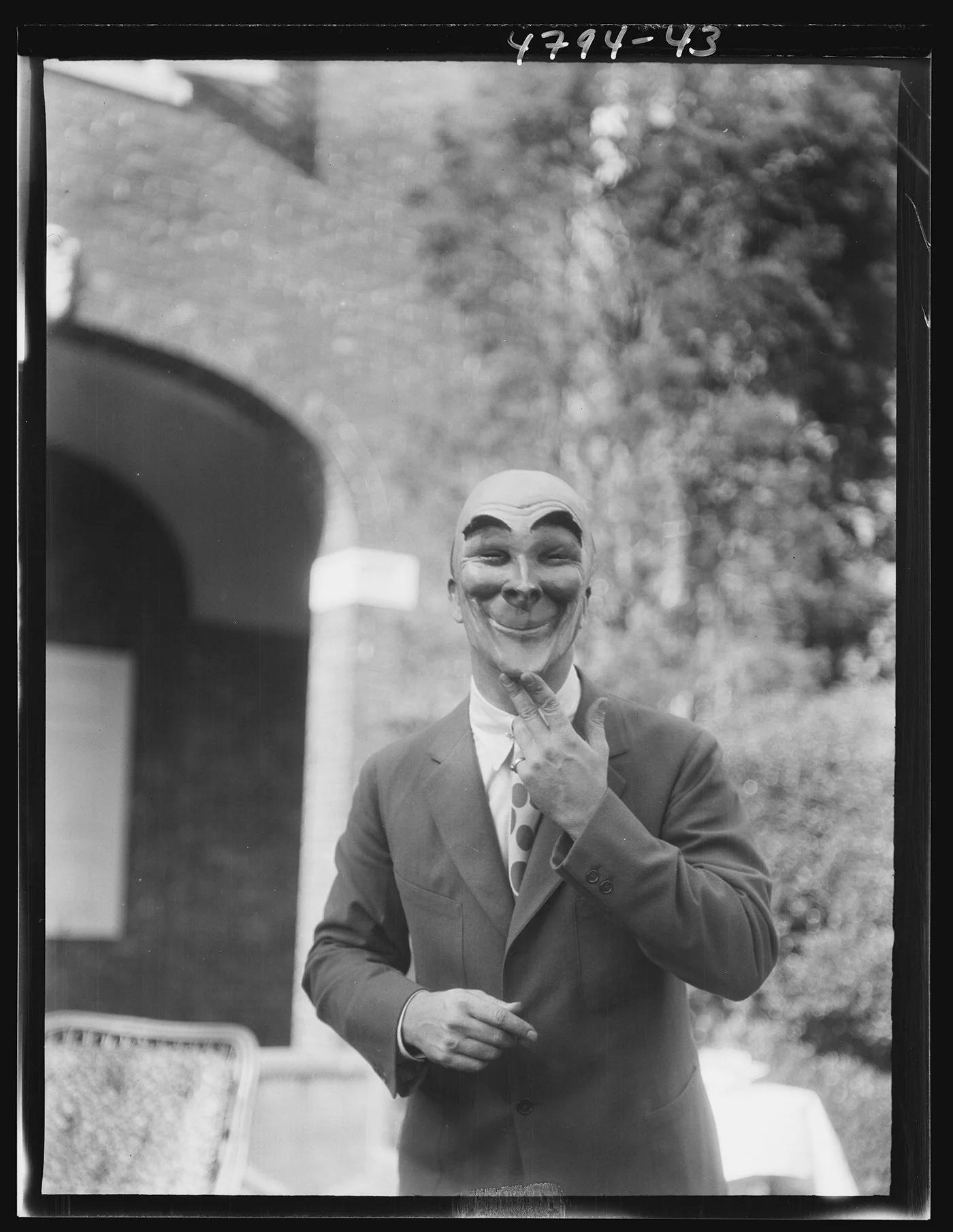
A man wearing a mask made by W.T. Benda, 1925
Unlike the simple domino masks worn at masquerade balls for centuries, Benda's creations were works of art. Each was sculpted by hand from layers of papier-mâché before being carefully painted and finished with wigs, hats, or elaborate costumes. Some were playful. Others were glamorous. Many exaggerated facial features with enormous eyes, tiny mouths, and impossibly smooth skin; qualities intended to make expressions more readable from a distance and lend the wearer an air of theatrical elegance.
The masks quickly became a cultural phenomenon.
Throughout the 1910s and 1920s, they appeared at society parties, charity balls, theatrical productions, fashion events, and artistic portraits. Wealthy families commissioned custom masks, magazines featured Benda's designs, and photographers—including Arnold Genthe—created striking portraits that blurred the line between fine art and performance. Wearing one of Benda's masks wasn't considered strange; it was sophisticated, fashionable, and delightfully whimsical.
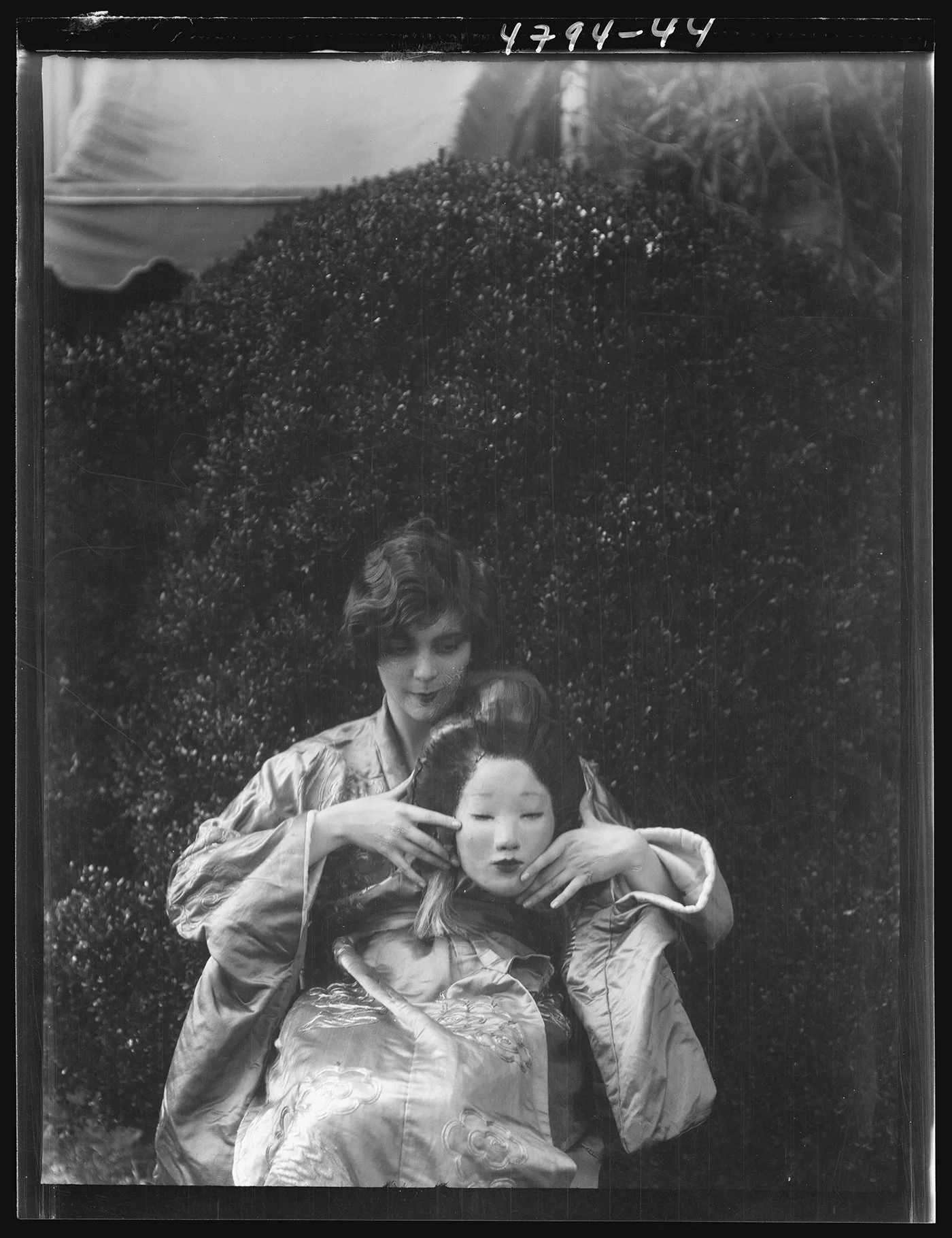
A woman holding a mask made by W.T. Benda, 1925
A century later, however, we've inherited an entirely different visual vocabulary.
Modern audiences have grown up with horror films, haunted attractions, and psychological thrillers that use expressionless faces and oversized features to create discomfort. What Benda intended as graceful and theatrical now lands squarely in what psychologists call the uncanny valley—that unsettling feeling we experience when something appears almost human, but not quite.
The result is an accidental transformation. These masks haven't changed in a hundred years.
We have.
That's what makes photographs like these so fascinating. They're not relics of horror but of high society, images that reveal how dramatically our perceptions evolve over time. What one generation considered elegant, another experiences as deeply unsettling.
Sometimes history doesn't become stranger because it changes.
It becomes stranger because we do.
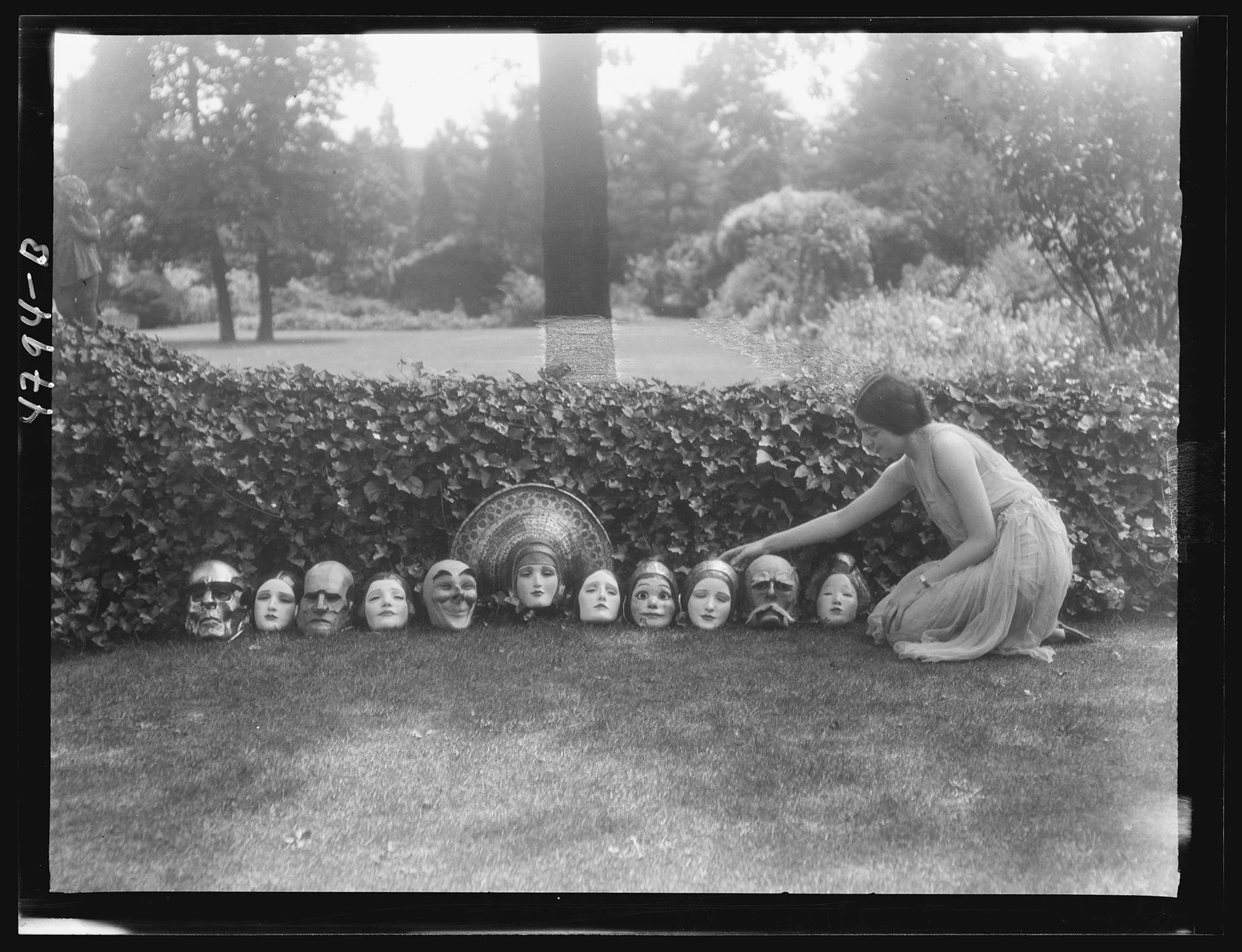
A selection of masks made by W.T. Benda, 1925
