

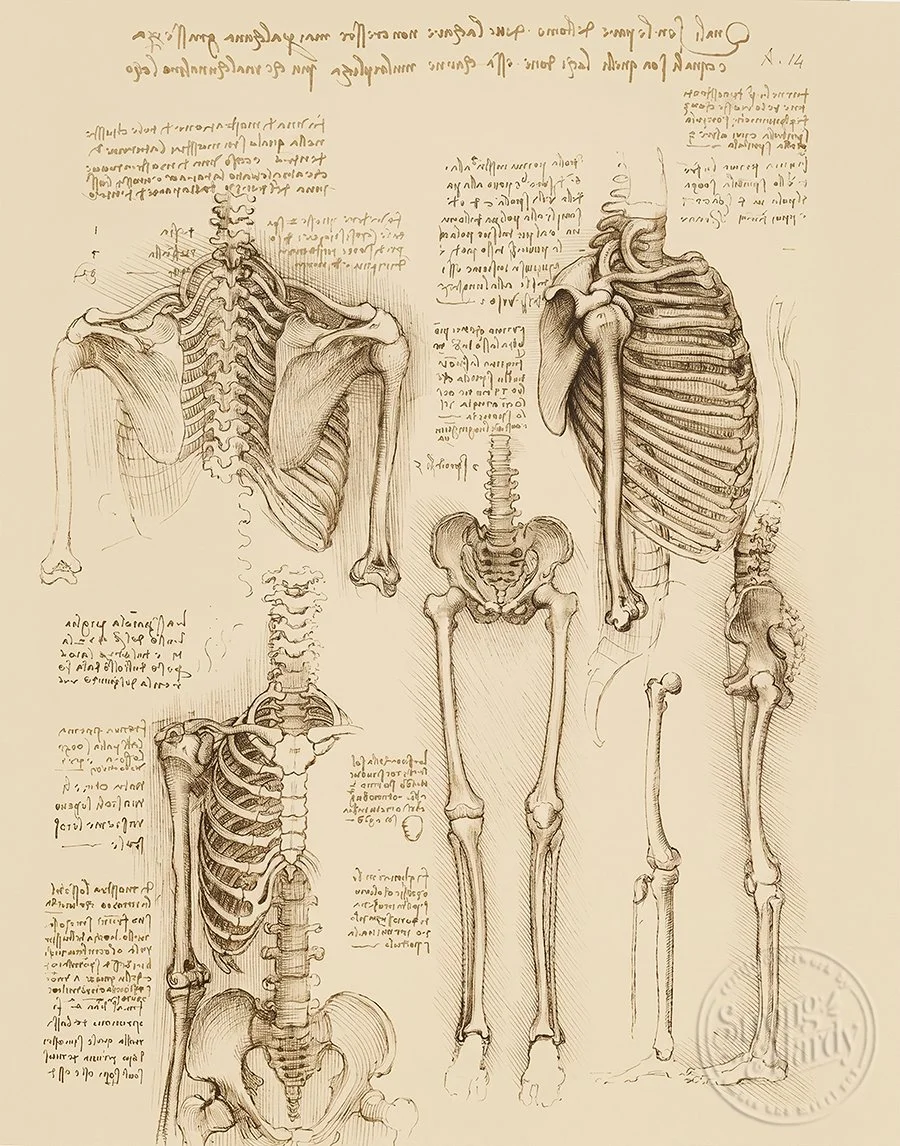
Leonardo’s Anatomical Studies: Chest, Leg Bones and Pelvis by Leonardo da Vinci, 16th Century
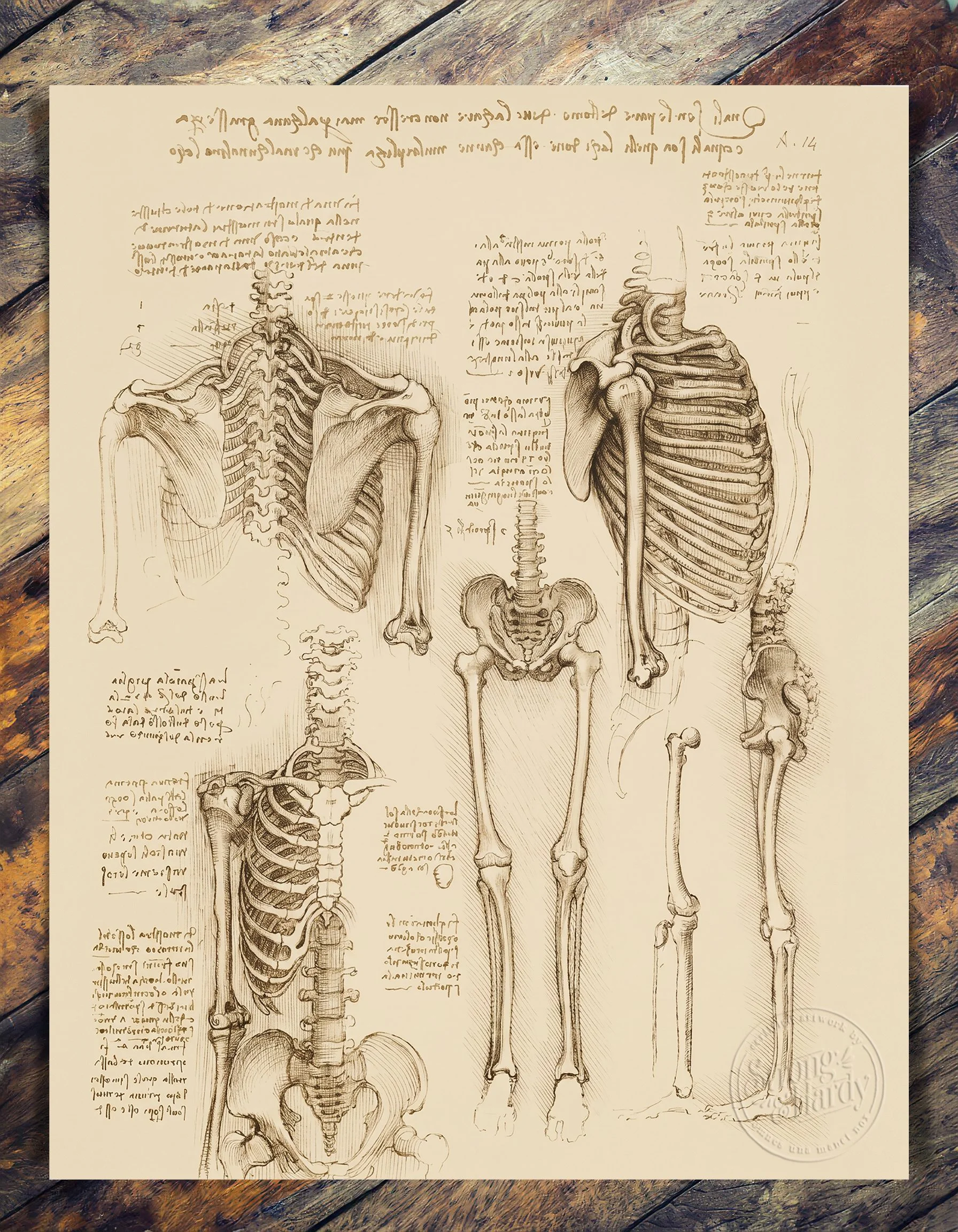
Few artists have pursued knowledge as relentlessly as Leonardo da Vinci. Between the late fifteenth and early sixteenth centuries, he performed dozens of human dissections in an effort to understand the body not simply as an artist, but as an engineer. His notebooks reveal an extraordinary curiosity about muscles, bones, organs, and movement—combining scientific observation with artistic precision in ways that were centuries ahead of their time.
Leonardo's anatomical illustrations weren't intended to shock. They were an attempt to uncover how the human body truly worked. To create them, he painstakingly dissected more than ten human cadavers, often working through the night as each body rapidly decomposed. Reflecting on the challenge, he wrote that he had been "hindered neither by stinginess nor negligence but solely by time."
Although his anatomical manuscripts remained largely unpublished during his lifetime, they are now regarded as some of the most remarkable scientific illustrations ever created—a testament to a mind that refused to separate art from discovery.
