

From the Vaults of the Unhinged: The Patron Saint Who Carried Her Eyes on a Plate
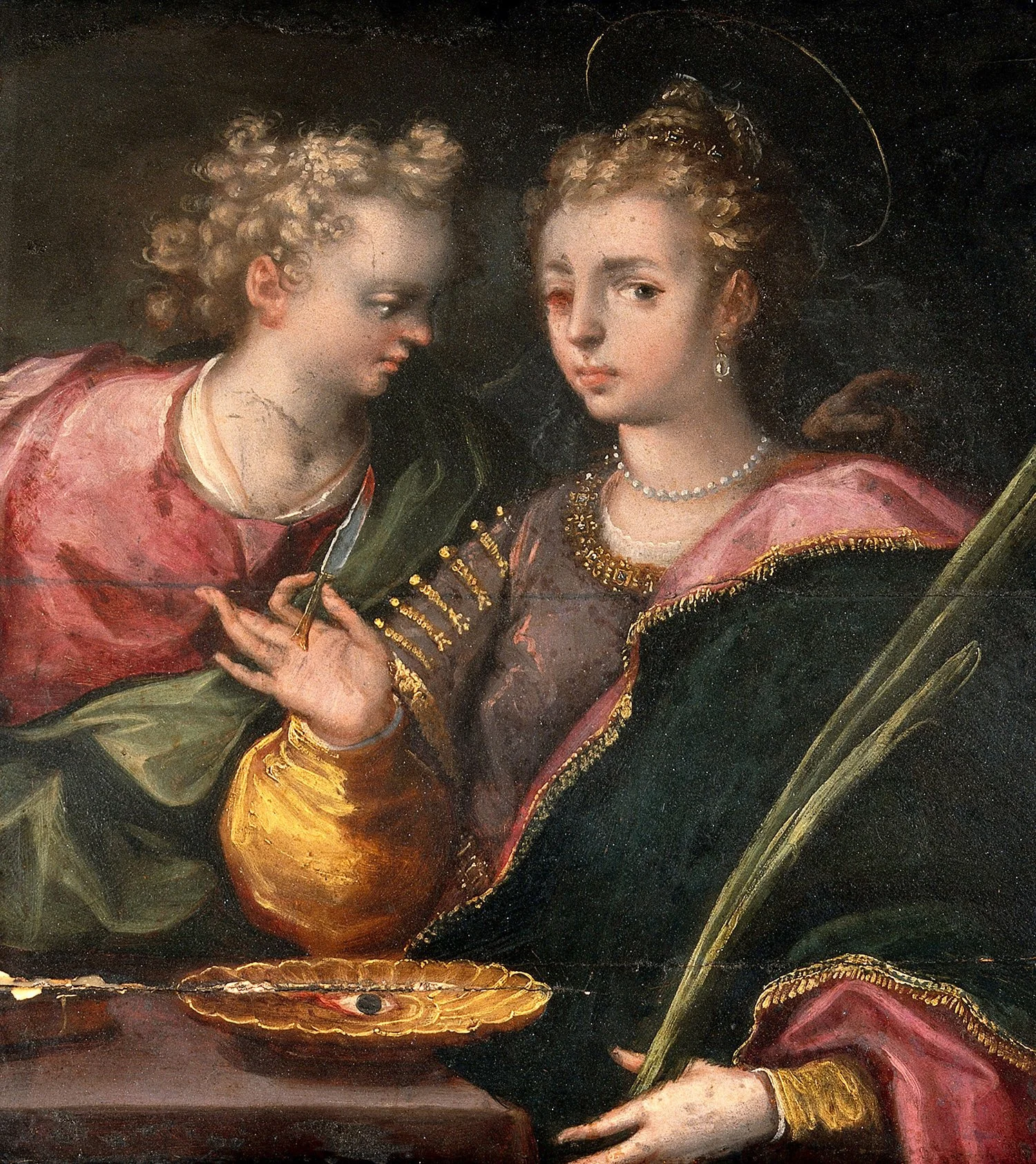
Saint Lucy with Angel, artist unknown, 16th century
History is filled with images that seem bizarre through a modern lens, but few are as immediately arresting as the countless paintings of Saint Lucy calmly presenting her own eyes on a golden platter.
Lucy lived in Syracuse, Sicily, and was martyred during the persecution of Christians under the Roman emperor Diocletian around A.D. 304. While the earliest historical accounts simply describe her execution for refusing to abandon her faith, medieval legend embellished her story over the centuries.
One popular version tells of a persistent suitor who became captivated by Lucy's beautiful eyes. Determined to preserve both her faith and her independence, Lucy removed them herself and sent them to him. Miraculously, God restored her sight with eyes even more beautiful than before. Another version claims her eyes were gouged out during her torture by Roman authorities. Whatever the origin, the symbolism endured.
As devotion to Saint Lucy spread throughout Europe, artists needed a simple way to identify her among the many saints appearing in churches and altarpieces. The solution was unforgettable: she would be shown carrying a small dish containing two eyes. Alongside this distinctive attribute, she is frequently depicted with a palm branch, the traditional symbol of martyrdom, and occasionally a lamp, representing her name, which derives from the Latin lux, meaning "light."
To modern audiences, the imagery can feel startlingly graphic. Yet to Renaissance and Baroque viewers, these paintings were not intended to shock. They represented steadfast faith, miraculous restoration, and the belief that spiritual sight transcends physical vision.
Today, Saint Lucy remains the patron saint of the blind and those suffering from eye diseases. Her unusual iconography has endured for centuries, making her one of art history's most recognizable and delightfully unsettling figures. It's a perfect reminder that long before horror films and Halloween decorations, artists were already filling galleries and cathedrals with imagery that could still stop viewers in their tracks.
