

The Flower Woman in Bloom
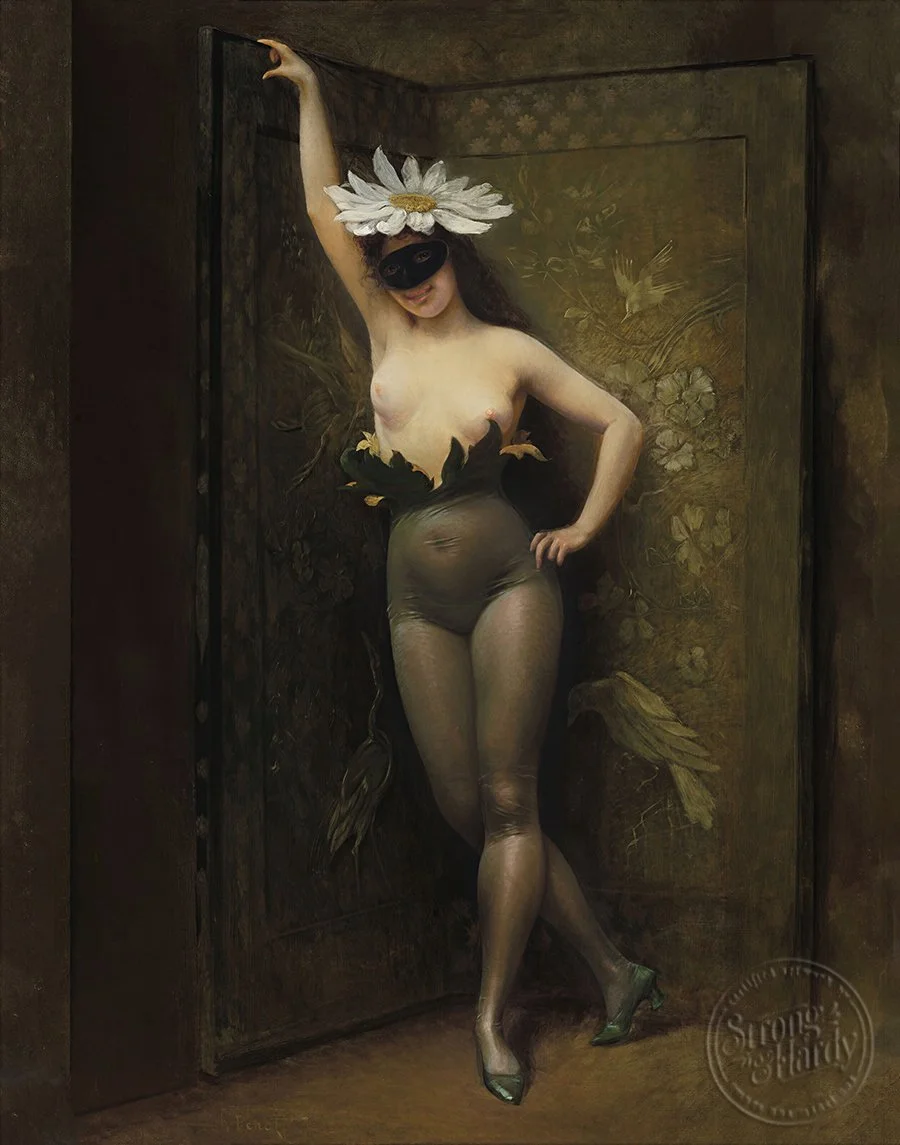
La Femme Aux Fleurs by Albert Joseph Pénot, 1900
La Femme Aux Fleurs (“Woman with Flowers”) showcases Albert Joseph Pénot’s fascination with the female figure, a subject that appeared throughout much of his career. Unlike the darker, occult-inspired works for which he is best known today, this painting embraces a softer and more romantic mood. Draped in floral iconography, the woman becomes both subject and symbol: a living embodiment of beauty, growth, and the fleeting nature of youth.
Flowers have long carried layers of meaning in Western art, representing everything from love and purity to mortality and the passage of time. Pénot places these traditional symbols alongside his idealized female figure, creating an image that feels suspended between portrait and allegory. The dreamlike atmosphere, gentle lighting, and careful attention to anatomy draw the viewer’s eye toward the woman herself, while the flowers act as a visual echo of her grace and vitality.
As with many of Pénot’s works, the setting remains secondary to the figure. The background recedes into softness, allowing the subject to emerge from the canvas with an almost ethereal presence. The result is a painting that celebrates beauty while quietly reminding us of its impermanence, a theme that has captivated artists for centuries.
