

From the Vaults of the Unhinged: Memento Mori: A Skeleton in a Niche
Death has always been good design.
Long before skulls became shorthand for rebellion, fashion, or Halloween décor, they served a much simpler purpose: a warning. A reminder. A confrontation.
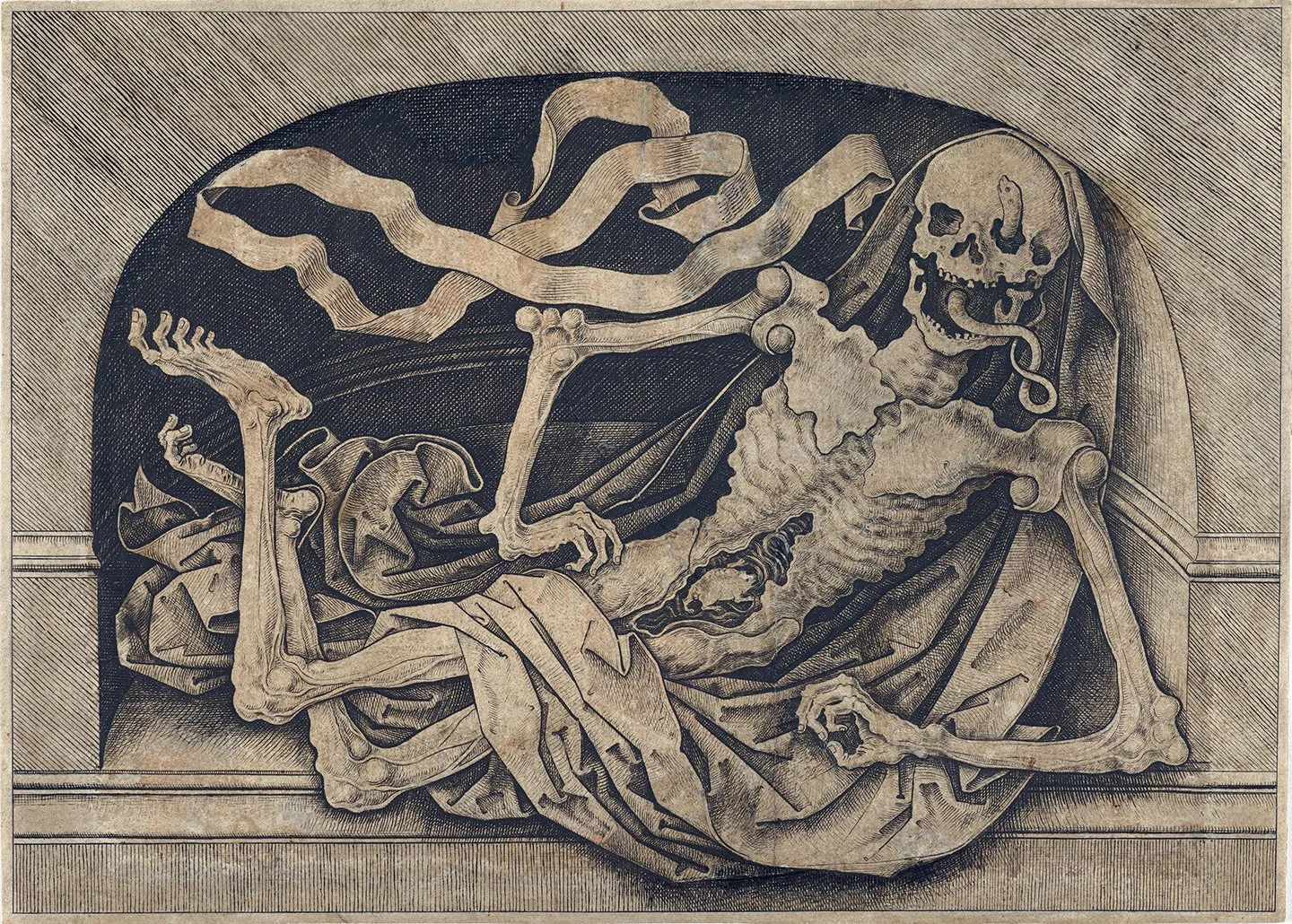
This month’s From the Vaults of the Unhinged feature is Memento Mori: A Skeleton in a Niche, a late 15th-century engraving by Master IAM of Zwolle, a Netherlandish printmaker active around 1470–1495. Now held in the collection of the The Metropolitan Museum of Art, the engraving is modest in size—just over 6 inches tall—but its message is anything but subtle.
The Latin phrase memento mori translates to “remember you must die,” and that was exactly the point. These objects and images weren’t meant to be morbid for the sake of drama, they were intended to keep mortality close at hand. In medieval and Renaissance Europe, death was not hidden away. Plague, war, and short life expectancy made mortality an everyday reality, and art reflected that honesty.
Skeletons became one of the most direct symbols of that truth. They appeared in devotional objects, jewelry, paintings, carvings, and prints like this one, reminding viewers that wealth, beauty, and status all end the same way. Death makes equals of everyone.
In this engraving, there’s no grand narrative or dramatic setting, just a solitary skeleton standing within a shallow niche, almost like a saint in a church alcove. That quiet presentation makes it more unsettling. There’s no violence, no spectacle, only inevitability. It doesn’t threaten. It simply waits.
That stillness is what makes it powerful. The figure feels less like a horror image and more like a mirror: this is where we all arrive eventually.
Memento mori imagery often included symbols like extinguished candles, hourglasses, flowers, or skulls—objects that quietly marked the passing of time and the fragility of life. This engraving strips all of that away and leaves only the final result. No symbolism needed. Just bone and silence.
There’s something strangely comforting in that bluntness. These works weren’t only warnings; they were also invitations to perspective. If life is brief, then meaning matters. If time is limited, then attention becomes sacred. Remembering death was never just about fear, it was about learning how to live.
And centuries later, that still feels relevant.
We surround ourselves with distractions designed to make us forget impermanence. This little engraving does the opposite. It asks you to look directly at it.
Not to despair.
Just to remember.
